The Children Who Had Never Left Home Are Back to Change the World
Educational robotics is opening global opportunities for young people across Africa in ways partnerships strive for, and often beyond imagination.

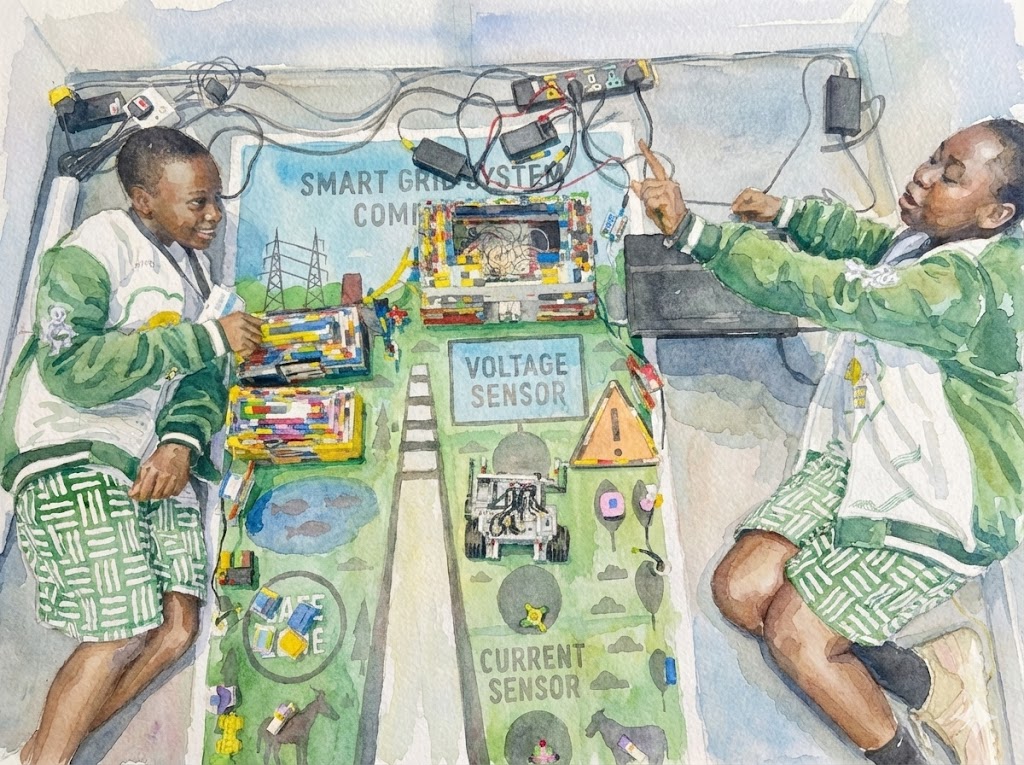
No words can fully capture the moment when a nine-year-old who has never left home boards her first airplane to represent her country on the other side of the world. Or when a child raised in a school with no computer room presents his robot to judges from ten different countries. Yet these moments belong to the same World Robot Olympiad (WRO) story – one where young innovators from 14 African countries stepped onto the global stage in numbers never seen before, rising to the most life-changing challenge of their lives, supported by mentors, coaches, and partners working to transform African education through robotics.
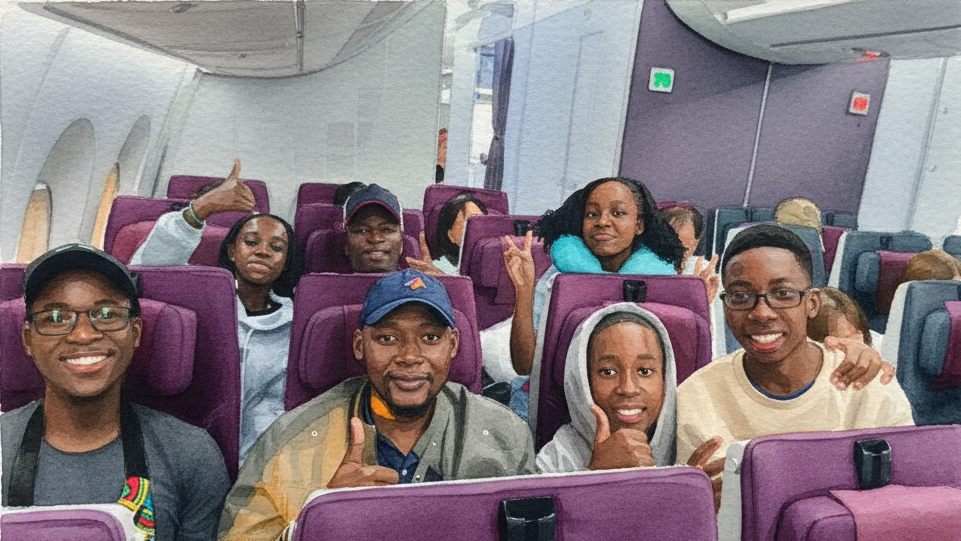
Kirubel, Dagim, and Dinaol were so afraid of missing their flight that they showed up at their coach’s office in Addis Ababa six hours early. Tewodros Mulugeta, Kotebe University’s vice president, had prepared them not only academically but emotionally, guiding them from late-night coding sessions all the way to the WRO International Finals. They were now delighting in a lesson no textbook had prepared them for: the discovery that they truly belonged on a global competition stage.
Meanwhile, in Zimbabwe, a student boarded the plane with her teacher, both flying for the first time. For this eleven-year-old orphan who once whispered she wanted to be an engineer, life has accelerated in the span of a year. She joined her school’s STEAM club, found confidence in the encouragement around her, teamed up with a classmate, and won the national WRO finals. Now the wings outside the aircraft mirror the wings she has grown within herself.
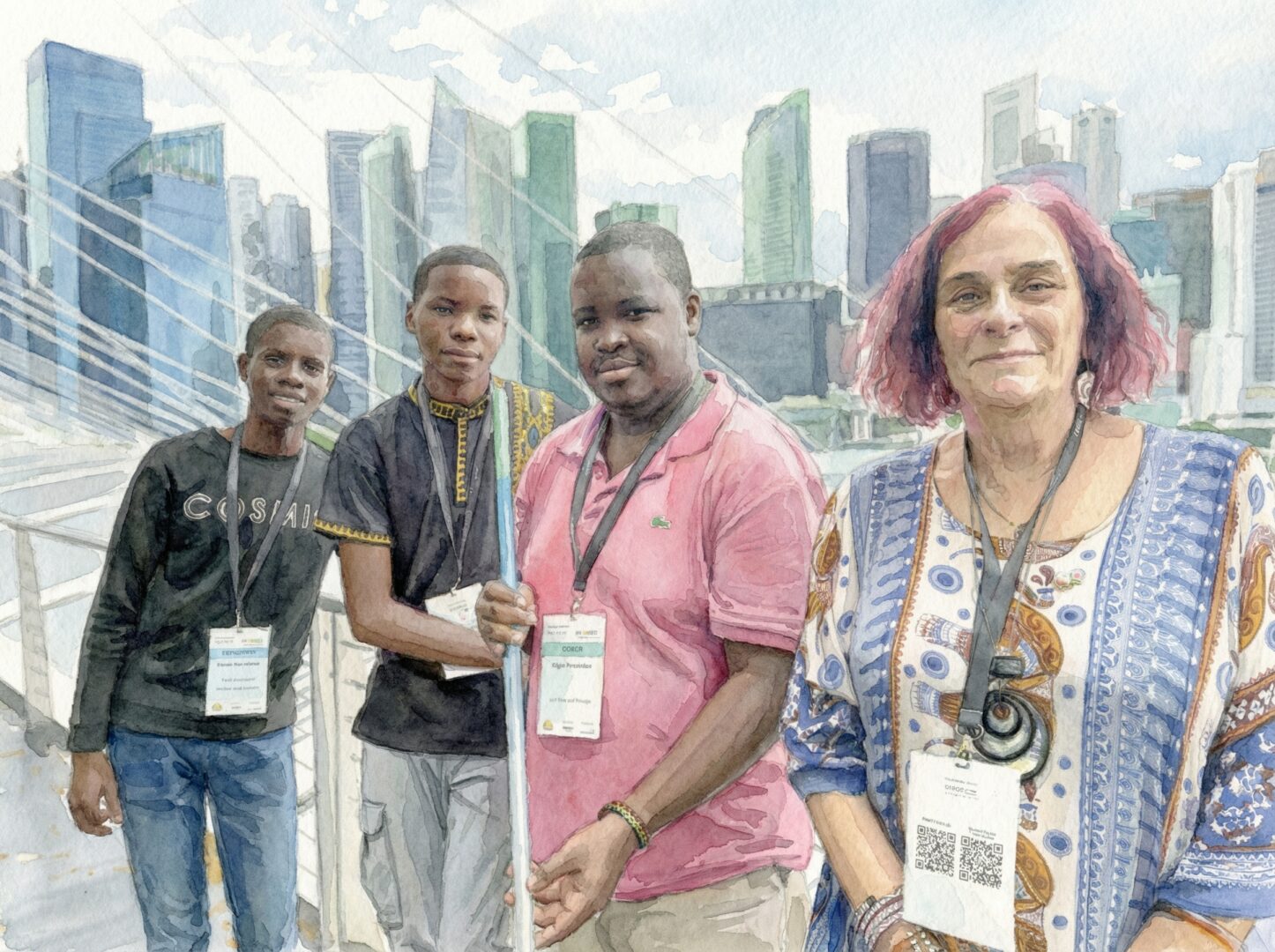
An hour earlier, on the western edge of Africa, in the island nation of São Tomé and Príncipe, Carlos and Silvio buckled up in silence after their families danced and cried on the road to the airport. They come from disadvantaged schools with no computer rooms. They were able to learn robotics this year because WRO National Organizer Manuela Costeira opened the STEAM space she had built in her Portuguese school and convinced the Ministry of Education to let all students from the island nation’s public schools use it. The boys trained twice a week, competed, won their national competition, and suddenly found themselves flying to the other side of the world.
For the majority of 50 African teams from 14 countries travelling to Singapore this year, several extraordinary firsts converged in one D-Day: holding a passport, leaving their country, and representing their country on a global robotics stage.
What an emotional journey, and not just in Mozambique, where drama unfolded in real time. Only the national winners were ‘supposed’ to travel to Singapore. But when judges called back the second-place team ‘because of a possible mistake,’ fear swept across their faces. Then the Irish Ambassador Patrick Empey, lifted a second giant boarding pass. ‘You too are going to Singapore.’ The tears came like rivers.
It Takes a Village: Partnerships Amplified
These three countries were among the ten Sub Saharan African countries represented for the first time at WRO International Finals. This movement did not scale by accident. The 2023 Google-UN ECA MoU was a continental turning point, establishing WRO as a strategic engine to teach AI, robotics, and STEM at scale. It anchored technical support, resources, and regional collaboration. It set a new expectation: African children deserve global opportunities, not crumbs of access.
The rest of the transformation happened locally, in the hands of public, private and nonprofit allies tirelessly building for the future:
Mentors on the road (again).
Teachers learning the wires after hours – 2,000 upskilled in 2025 for starters.
Nonprofits walking five hundred miles.
Ministries opening their doors to five hundred more.
In Nigeria, The Arc Lights Foundation approached the government with a STEAM partnership that flipped the script: train the teachers so the teachers can train the students. In Lagos State alone, more than 300 junior and senior secondary schools took part in regional and state-level WRO qualification challenges. Nationwide, this approach enabled 20,000 young people to participate in WRO in 2025.
In Zimbabwe, Minister Tatenda Mavetera captured the heart of partnership during the send-off ceremony. She thanked National Organizer Victoria Nxumalo “for being true to her word.” Victoria had once walked into the Ministry with a bold vision. Backed by the continental partnership with Google and ECA, she wanted to equip young Zimbabweans with digital skills, AI fluency, and robotics training. Because robotics lights up everything in a child’s learning circuitry. Critical thinking. Collaboration. Creativity. Spatial reasoning. Resilience. Often all at once.
An MoU soon followed. Her team delivered. One hundred and fifty teachers were upskilled, because “educators cannot teach what they do not know.” Five thousand learners trained later, Zimbabwe is now preparing to introduce AI learning from the earliest grades.
Innovation With a Pulse: Purpose Delivered
Continent-wide too, the scale keeps rising: from 9,000 young Africans learning robotics last year to 40,270 in 2025. But the real story is not in the numbers. It is in what these children built and how they built it. For each of these students, the real journey began long before take-off; in schoolyards, community halls, borrowed classrooms, and homemade STEM centers scattered across a continent rising faster than the world is ready for.
Our previous article explored how robotics is not play for African youth, but actual purpose in motion. Now you can see for yourself what they presented in the Future Innovators category…
In Uganda, a country where one doctor serves 25,000 patients, three twelve-year-olds with barely months into coding designed a solar-powered medical assistant that reads vital signs and identifies illnesses even off-grid. After two national wins, Namwanje, Lukooba and Nsimbe travelled with Doctor 247 to Singapore and are now preparing for pilot testing with the Ministries of Health and Science.
São Tomé’s Blue Cane, built by Carlos and Silvio, is a smart cane built with the eyes of the heart. Affordable, local and scalable, it is about to be distributed to visually impaired people in their community.
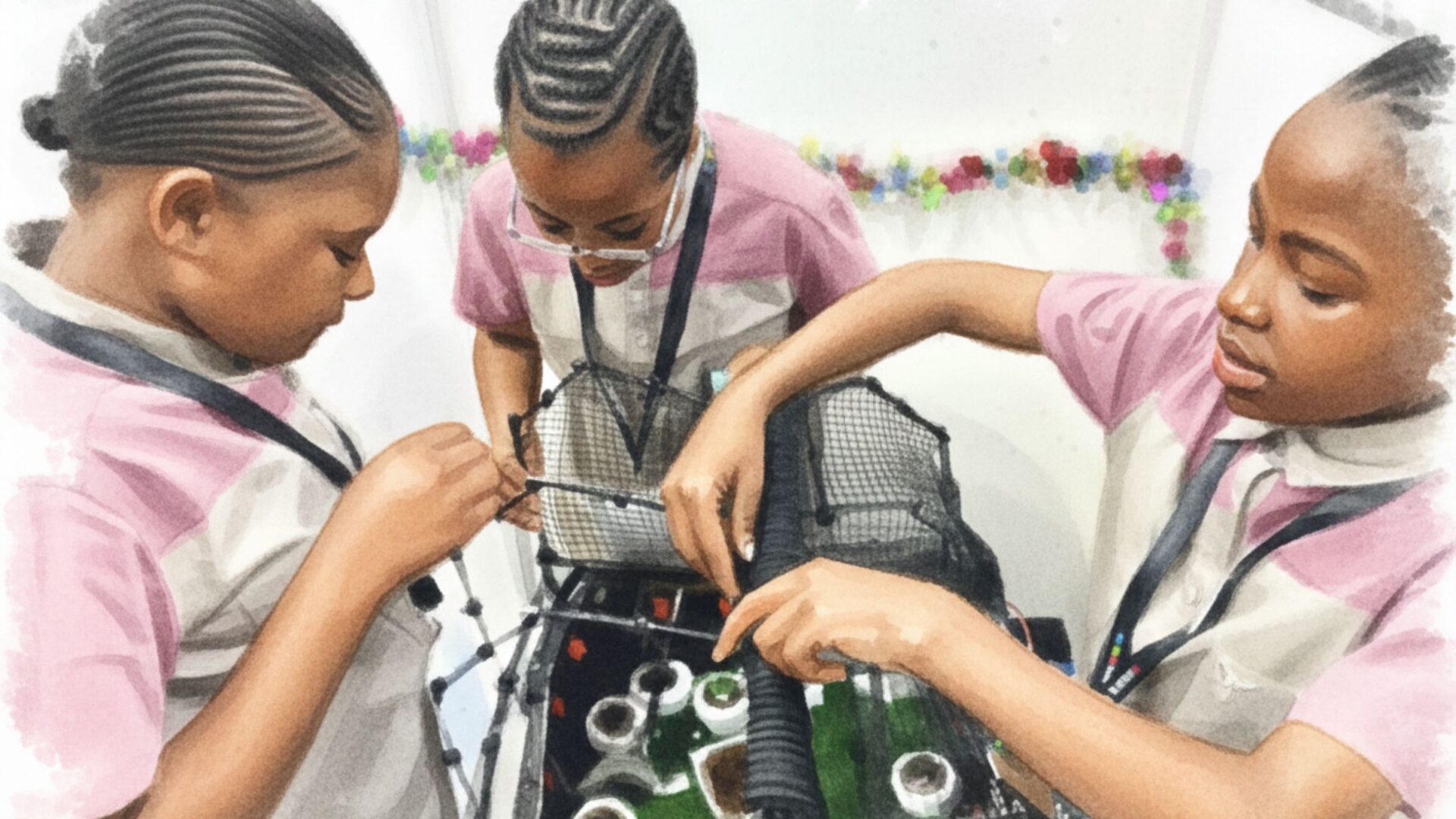
Meanwhile, far to the south, three girls were dreaming up a way to make food grow where climate change has left the earth hungry. Their Green Thumb Project is a solar-powered autonomous greenhouse that grows nutrient-dense food affordably for schools, small farmers and families in need. A blueprint for climate-smart agriculture ready to spread across Africa.
A few hundred kilometers east, Daniel and Malen designed the perfect farmer’s ally, able to lift entire harvests in Mozambique. Agrobot autonomously plants, waters, and tills soil where drought has drained the land – saving time, protecting tired hands, and helping bring life back to fading fields.
Francophone Africa: The Rise Begins
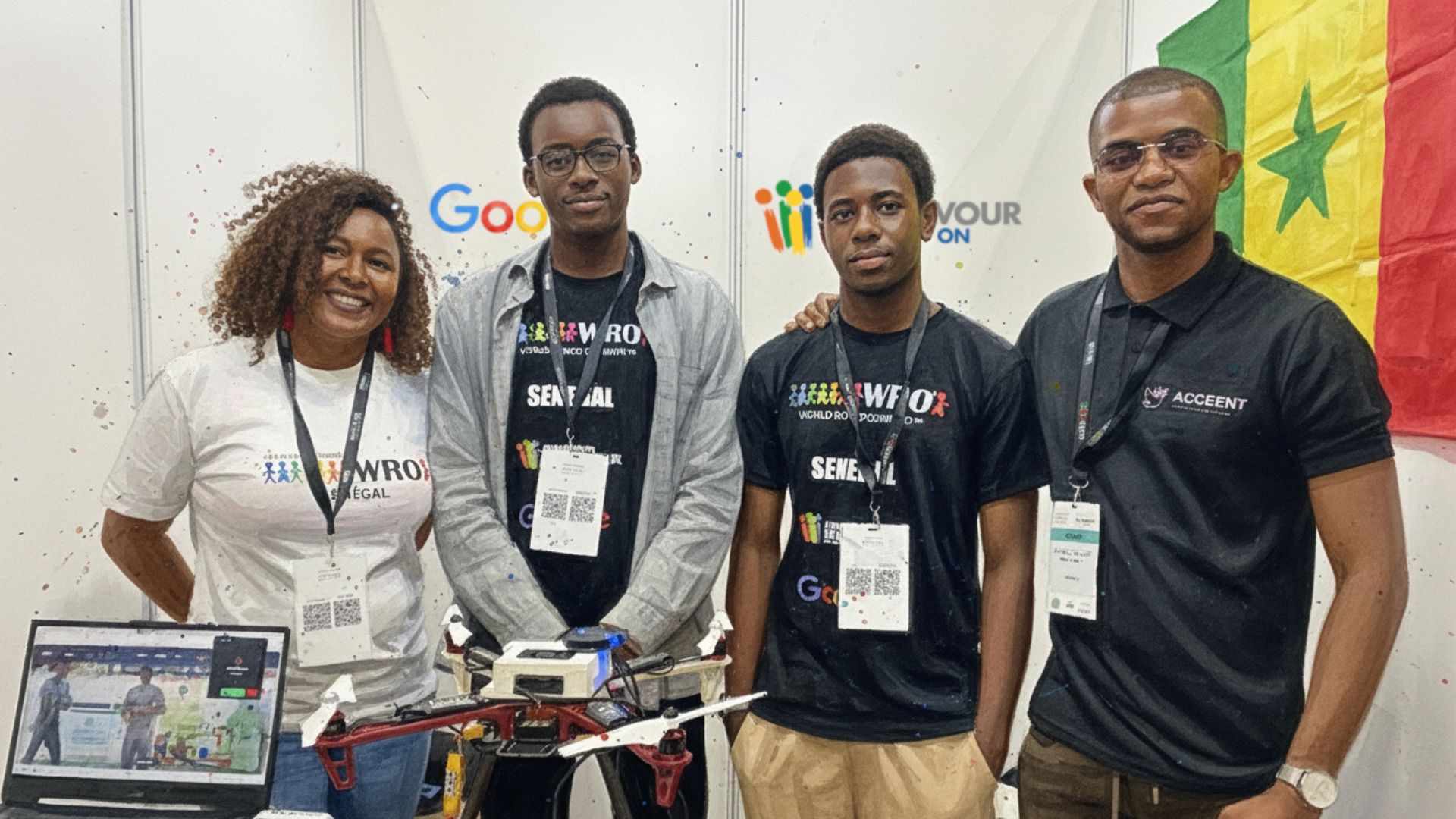
Francophone Africa made a remarkable debut this year, with Senegal joining the World Robot Olympiad for the first time. Thanks to the support of the Endeavour Foundation and the ACCEENT nonprofit, 2,000 Senegalese youth were able to participate, marking the country’s entry into the continental robotics movement and opening the door for thousands more to access STEM opportunities in the years ahead.
WRO Senegal’s winning team set out to solve one of the country’s most persistent challenges: the isolation of rural communities from essential services. Their solution is a digital airbridge, a real-time semi-autonomous drone delivery system that moves vital goods across long distances. By connecting remote villages with urban centers, the project reflects a vision for inclusive development, creating jobs, reducing poverty, and empowering vulnerable groups to harness AI technology.
Meanwhile, the Democratic Republic of Congo celebrated a historic milestone with its first-ever presence at the WRO International Finals – “a turning point for Congolese youth,” says National Coordinator Sandrine Tshiamala. With KOLESHA, she stands at the heart of this momentum, working closely with government and private partners as a true SDG 17 engine. The winning team carried the DRC flag to the global stage with Traffibot, an AI-powered traffic management system developed in just three weeks that earned a standout score of 100 points. Buoyed by this success, KOLESHA is already collaborating with ministries to scale robotics, AI, and digital training across the provinces of one of Africa’s largest nations.
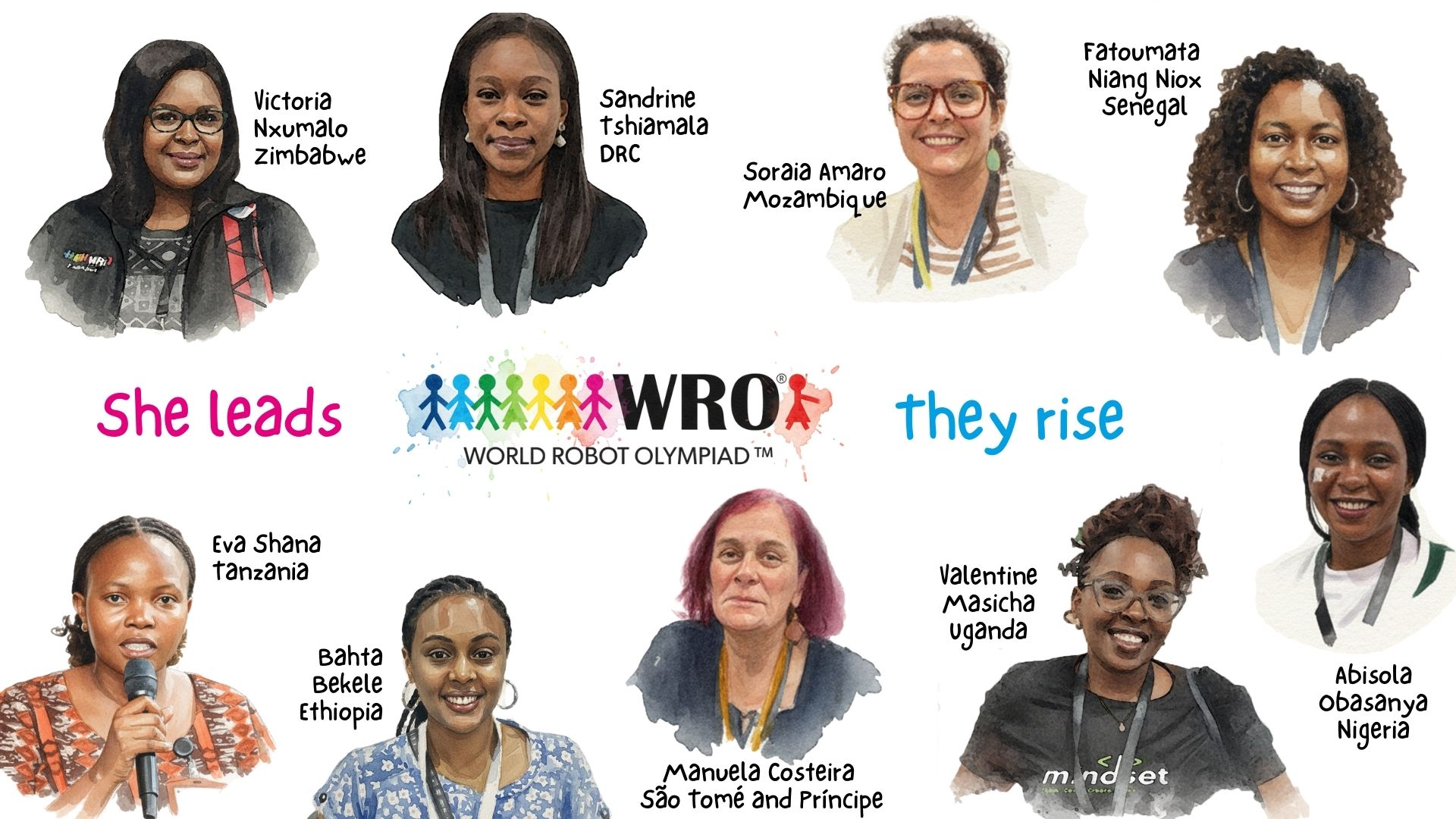
She Leads, They Rise:
Power of Role Models Multiplied
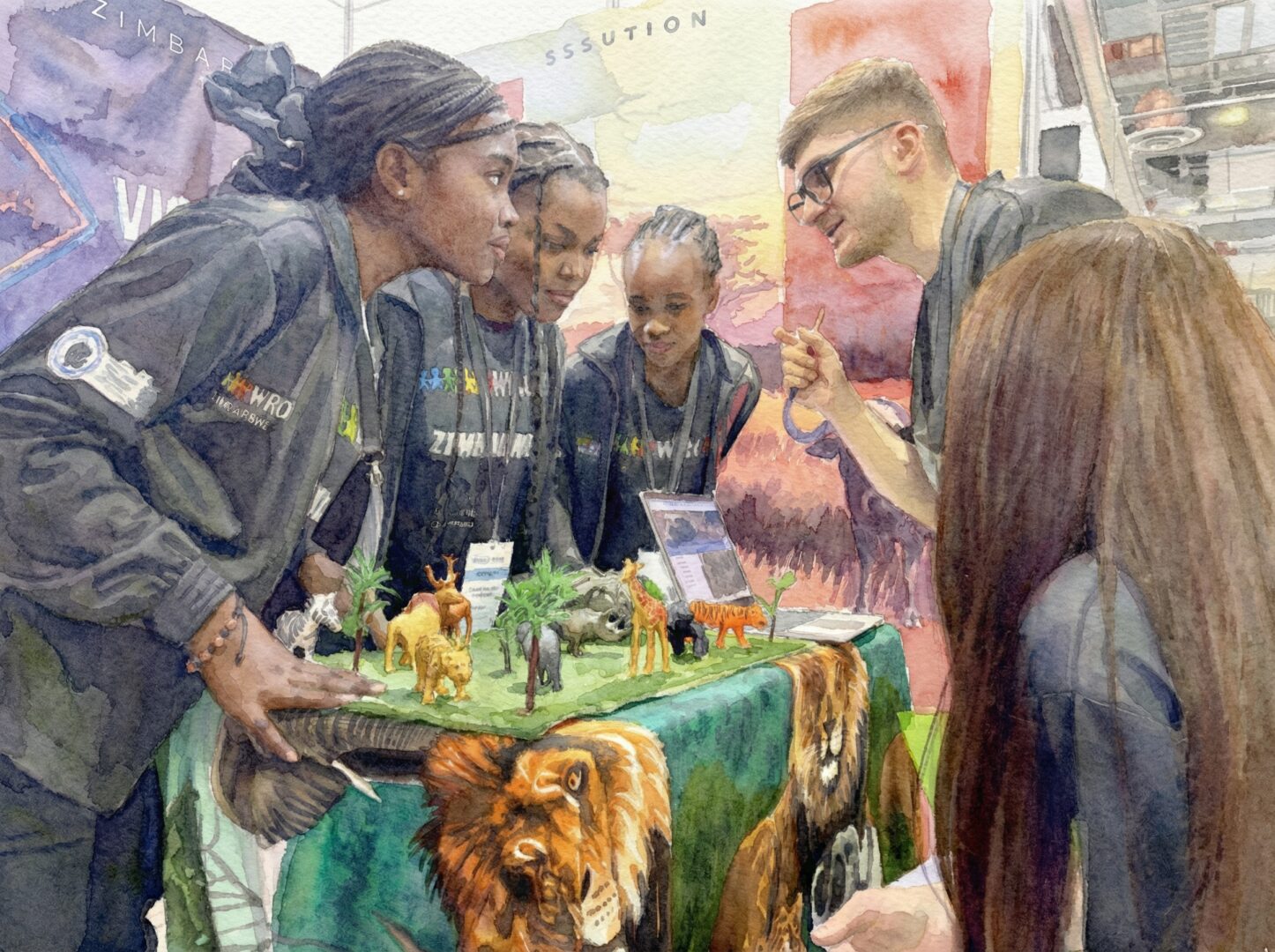
There was another quiet rise worth noting: the surge of all-girls teams building with purpose. In Zimbabwe, Lereko, Mosa and Mpolokeng brought Vigil One to life: a $300 solar-powered AI anti-poaching system already protecting 7,500 hectares and projected to reduce poaching by 70 percent. Their bot detects threats with 95 percent accuracy, alerts rangers in two seconds. Three times cheaper than drones, it is ready to scale across more than 100 African reserves.
Speaking of girls in STEAM, the Nigerian delegation spoke volumes. Out of the fourteen teams that flew out from Lagos, most were girls. Anywhere else, this might be a footnote. On a continent where girls still face systemic barriers to education, even more so since the COVID crisis, this is a turning point – driven by female educators themselves.
Seventy-five percent of WRO National Organizers in Africa are women who fully weigh the power of a role model for African girls, and it is far reaching. Girls stay in school when they see a woman leading. Girls pursue the STEAM path when they see a woman building. Girls dream bigger when they see a woman making decisions that matter. Girls land in Singapore because a woman believed in them.
Research concurs: when girls have a woman role model in STEM, they are 2 to 3 times more likely to pursue science, they stay in school longer, develop stronger leadership skills, and outperform peers in problem-solving. 1
Returning With the Elixir
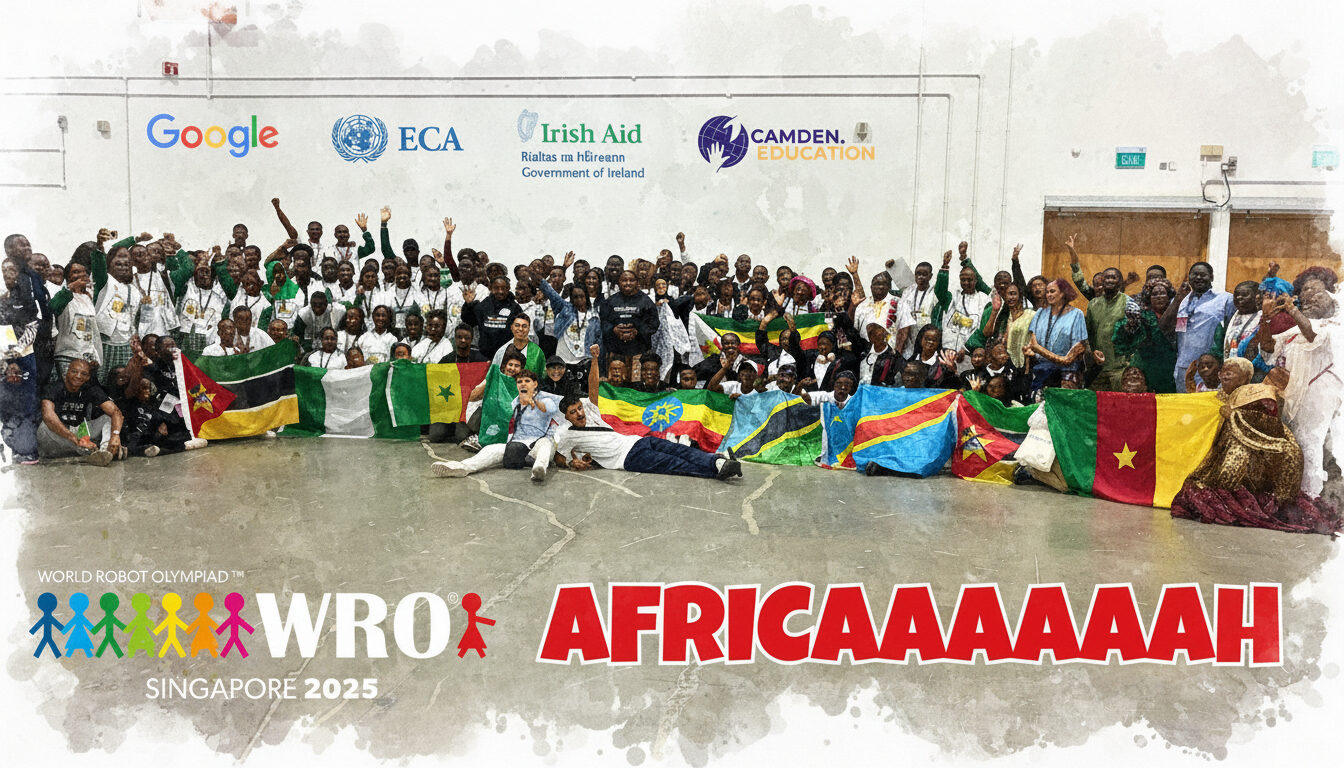
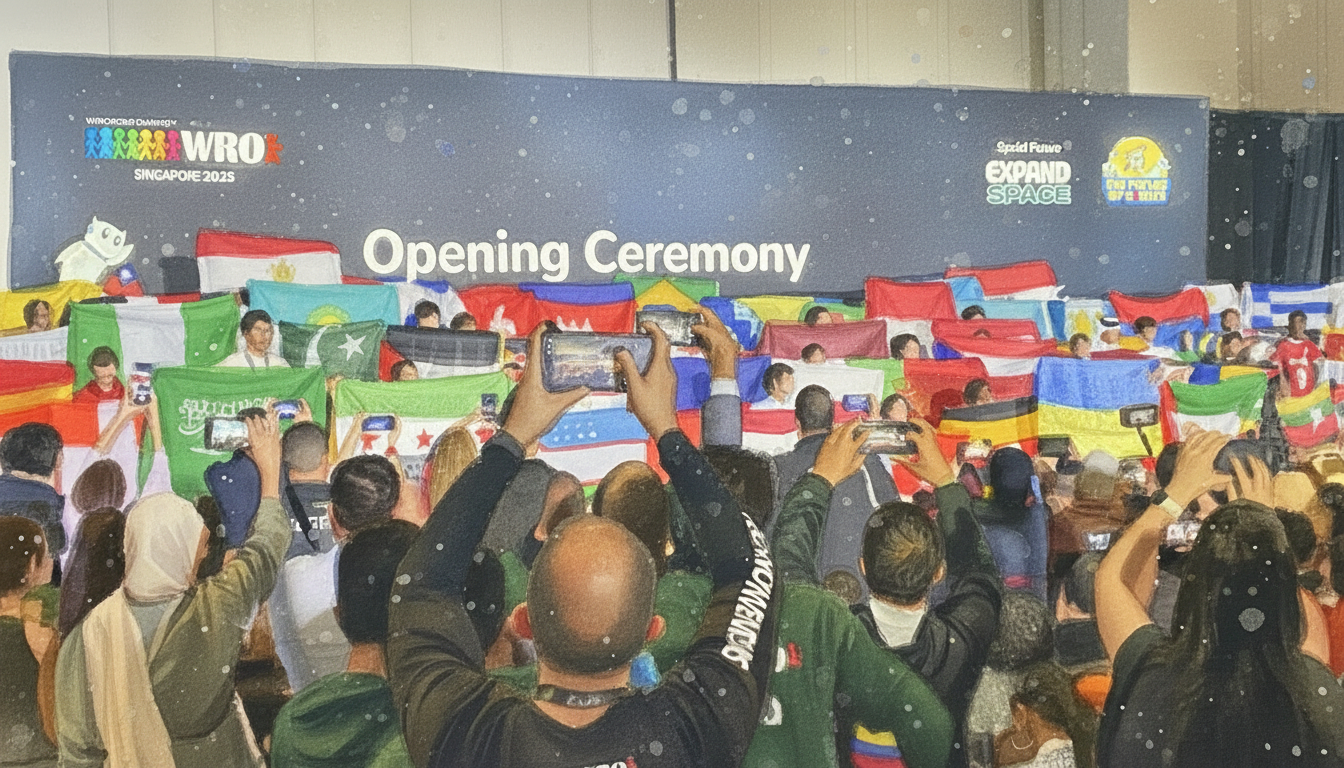
Singapore dazzled. A symphony of languages. An ocean of flags. A constellation of robots. A global stage too small to welcome all of Africa at once. These young innovators came home carrying something no medal can replace: a worldview expanded, an identity strengthened, an inner drive that refuses to shrink back to its former size. They returned with the clarity that their ideas matter, the confidence that when opportunity arrives, they rise, and the fire to reach higher still. Life changing, multiplied.
Their coming home marks not an ending, but a renewed call to SDG 17. More hands are needed, more visions aligned, as the work continues.
Because robotics competitions are the classrooms of the century, where young people learn to bridge dreams, people, purpose, and technology.
Because half of the world’s workforce will be African by 2050.
Because the global narrative will be broken if these kids don’t start shaping it today.
An initiative powered by like-minded partners:

To support the initiative in Africa this year or for more information:
Bernard Kirk
CEO
The Camden Education Trust
bernard.kirk(at)thecamdentrust.org
Bahta Mamo Bekele
Programme Coordination Officer, TICID
United Nations Economic Commission for Africa
bahta.bekele(at)un.org
- These outcomes are strongly supported by UNESCO (2019), Microsoft–AAUW (2018), McKinsey (2020), AfDB (2021), and Brookings Institution (2022).
UNESCO (2019). Cracking the Code: Girls’ and Women’s Education in STEM. UNESCO Publishing.
Microsoft & AAUW (2018). Closing the STEM Gap: Why STEM Classes and Careers Still Lack Girls. Microsoft / American Association of University Women.
McKinsey Global Institute (2020). Reimagining Economic Growth in Africa. McKinsey & Company.
African Development Bank (2021). Jobs for Youth in Africa. AfDB.
Brookings Institution (2022). The Transformative Power of Global Learning. Brookings. ↩︎